

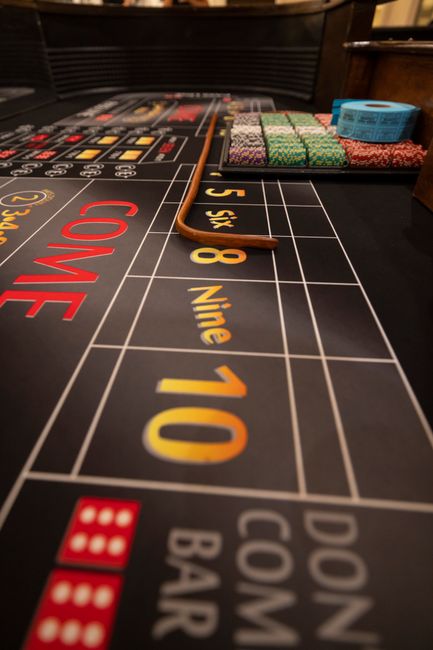
Every gambler has heard the phrase "the house always wins." It's technically true over an infinite number of bets, but it's also deeply misleading. In the short run—which is every session you'll ever actually play—variance is the only thing that matters. Understanding that distinction is the difference between treating gambling as entertainment and treating it as a slow, confusing way to lose money you needed.
Whether you're spinning slots, grinding poker tables, or backing a Saturday accumulator, the same mathematical reality governs your experience. Let's break down what's actually happening when you play, and how to tilt the odds of having a good time heavily in your favor.
House Edge Is Not the Same as Your Expected Loss
Take a standard European roulette wheel. It has 37 pockets: numbers 1 through 36 plus a single zero. If you bet $10 on red, you win $10 on 18 red numbers and lose $10 on 18 black numbers and the green zero. So you win 18 times and lose 19 times out of 37. Your expected loss per spin is $10 divided by 37, or about 27 cents. That's a 2.7% house edge.
Now here's the part that trips people up: you will almost never lose exactly 27 cents per spin. You'll lose $10, win $10, or occasionally string together a run that makes you feel like a genius. The house edge is a long-term average, and the gap between that average and your actual result is variance.
Slots work the same way but with far more dramatic swings. A modern video slot might have a return-to-player (RTP) of 96%, meaning the house edge is 4%. But that 4% is calculated over millions of spins. In a single session of 200 spins, you could easily finish up 300% or down 100%. The math doesn't care about your session; it cares about the aggregate.
Why RTP Numbers Can Mislead You
Two slots can both advertise 96% RTP and feel completely different. One might pay small amounts frequently—low volatility. The other might go 150 spins without a win, then dump a massive payout—high volatility. Neither is "better" in a mathematical sense, but they suit different temperaments and bankrolls. Kèo nhà cái offers a practical breakdown of the topic.
- Low volatility slots: Frequent small wins, gentler bankroll decline, better for long sessions on a smaller budget.
- Medium volatility slots: A balance, often with bonus features every 80–120 spins.
- High volatility slots: Long dry spells, huge potential payouts, suitable only if your bankroll can survive 200+ losing spins.
If you sit down at a high-volatility slot with 50 spins' worth of bankroll, you're not unlucky when you bust—you're just underfunded for the variance.
The Poker Table Is a Different Beast Entirely
Here's where things get interesting. In casino games and sports betting, you're playing against a fixed mathematical edge. In poker, you're playing against other people, and the house takes a rake. That means your edge comes from outplaying opponents, not from beating the dealer.
A skilled poker player can have a positive expected value (EV) over thousands of hands. But even then, variance is brutal. A winning player might go 50,000 hands without a profit—statistically unusual, but entirely possible. This is why bankroll management in poker isn't optional; it's the entire game.
Standard bankroll rules for no-limit hold'em cash games suggest 20 buy-ins for a given stake. If you play $1/$2 with a $200 max buy-in, you need $4,000 dedicated to poker. For tournaments, the rule is often 100 buy-ins. These numbers aren't arbitrary—they're calculated to keep you from going broke during normal downswings.
Three Tips That Actually Matter
- Track every session. Not to punish yourself, but to see the real pattern. Most players dramatically overestimate how much they've won and underestimate how much they've lost. A simple spreadsheet changes everything.
- Set loss limits before you sit down. Decide the number, write it down, and when you hit it, you stop. No negotiating with yourself at 2 a.m.
- Separate your gambling bankroll from your life money. If losing it would affect your rent, it's not a bankroll—it's a problem waiting to happen.
Betting Markets and the Illusion of Certainty
Sports betting has exploded in popularity, and with it comes a particular cognitive trap: the feeling that you "know" an outcome. You've watched every game your team played. You understand the matchup. Surely that means something.
It does—but the bookmaker knows it too, and the odds already reflect it. When you see a team at -250, the market is implying roughly a 71% chance of winning. If you think it's actually 80%, you've found value. If you think it's 60%, you're taking a bad price.
The bettors who win long-term are not the ones with the strongest opinions. They're the ones who can accurately price probabilities better than the market. That's a rare skill, and most people who believe they have it are simply experiencing the pleasant delusion of a hot streak.
Line Shopping Is Free Money
Different sportsbooks offer different odds on the same event. A team might be -110 at one book and -105 at another. That difference seems trivial until you multiply it over hundreds of bets. Consistently taking the best available price is one of the few unambiguous edges a recreational bettor can capture.
- Always compare at least three books before placing a bet.
- Take advantage of sign-up bonuses, but read the rollover requirements carefully—30x wagering on a bonus is very different from 5x.
- Don't chase losses with bigger bets. That's how small setbacks become financial catastrophes.
The Bottom Line: Play Like You Understand the Math
Gambling is entertainment, and entertainment has a cost. The question is whether you're paying for it consciously or bleeding money without realizing it. A movie ticket costs $15 and delivers two hours of enjoyment. A casino session might cost $100 and deliver four—or it might cost $1,000 because you kept chasing.
The players who last are the ones who treat variance as a fact of life rather than a personal insult. They set limits, they track results, they choose games with reasonable edges, and they never bet money they can't afford to lose. That's not boring—that's the only way to actually enjoy the experience without waking up with regrets.
The house edge is real. But so is your ability to manage it. Know the game, know yourself, and the math stops being your enemy and starts being just another part of the fun.


John Doe
14 January, 2022Having no content in post should have adverse..
Chauffina Carr
10 April, 2022We use these tests all time! Killer stuff!
Jim Séchen
16 July, 2022Thanks for all the comments, everyone!